
 Occupational safety
 Car and motorcycle
 Construction supplies
 Camping and Outdoor
 Hardware
 Electrical installation
 Power tools
 Garden
 Hand tools
 Light and lighting
 Painting supplies, tools and wallpaper
 Measuring and planning tools
 Sanitary
 Security technology
 Tool storage
 Personal protective equipment
 Car and vehicle electronics
 Car seats and accessories
 Car accessories
 Replacement tuning and wear parts
 Tires and rims
 Castles
 Tools
Tools
 Work lighting
 Material transport, load securing and accessories
 Lamps and lanterns
 Knives and tools
 Tools and repair kit
 Tents Weather protection and accessories
 Hook
Hook
 Furniture accessories
 Nails, screws and fasteners
 Door fittings and locks
 Padlocks
 Terminal blocks and kits
 Cable routing systems
 Tools and testing equipment
 Drilling machines
 Milling
 Heat guns
 Planer
 Planing machines
 Glue guns
 Compressors
 Soldering and desoldering equipment
 Multifunctional tools
 Nailers and staplers
 Wet and dry vacuum cleaners
 Agitators
 Sawing
 Saws and accessories
 Sandblasting machines
 Impact wrench
 Grinding machines
 Tool sets
 Accessories for power tools
 Irrigation equipment
 Garden furniture and accessories
 Garden tools
 Composting and garden waste
 Lawnmowers and electric garden tools
 Stripping tools
 puller
 Axes
Axes
 anvils
 Bit sets
 Wide spatula
 Crimping pliers
 Wire brushes
 Files and rasps
 Taps and dies
 Hammers and mallets
 Planers and accessories
 Woodwork
 Cartridge presses
 Punches and hole punches
 Bricklayer and laying tools
 chisel
 Knives, parts and accessories
 Multifunctional tools and accessories
 Riveting pliers
 Parcel tape roller
 Saws and accessories
 Cutting and shearing
 Cutting tools
 screwdriver
 Wrench
 Clamping devices
 Socket wrenches and socket wrench sets
 Stapler
 Tool sets
 Pliers
 Work lights
 Flashlights
 Tools
Tools
 Luggage scales
 Laser measuring devices and accessories
 to teach
 Marking tools
 Tape measures
 Scales Angles and Protractors
 Locating and testing equipment
 Spirit levels
 Fittings components
 Pipes connectors and accessories
 Pipe cleaning accessories
 Lockable window handles
 Tool belt
 Toolboxes
 Tool cabinets
 Tool bags







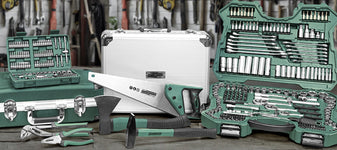


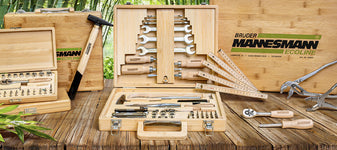


In short: You'll need two days. On Saturday, prune, clear leaves, and prepare your beds. On Sunday, shut off the water, clean your patio and furniture, cover them, and store your tools. The best time is between September and mid-October, before the first night frosts. Below, you'll find the complete checklist to print out, along with the tools you'll need for each task.
Starting in September gives you an advantage: the soil is still warm, the days are long enough, and most tasks can be completed without time pressure. If you wait until November, you'll be working in mud and near-freezing temperatures. So: block out a weekend, print the list, and get started.
When is the right time?
The first night frost typically occurs in most regions of Germany between mid-October and early November. Everything sensitive to frost—outdoor faucets, rain barrels, potted plants, irrigation systems—must be taken care of beforehand. Tasks involving pruning follow their own rules:
- Hedges: Only gentle shaping is permitted until September 30 (Federal Nature Conservation Act, protection of nesting birds). Significant pruning is possible from October 1.
- Shrubs and fruit trees: In autumn, only remove deadwood and diseased branches. The main pruning occurs in late winter.
- Lawn: Last cut in October or early November, when the grass stops growing. Do not cut shorter than 5 cm.
This means for this weekend: you prepare, tidy up, and protect. Radical pruning will only happen next month.
Saturday: Pruning, Leaves, Beds
1. Shape your hedges
A light shaping trim is perfectly sufficient now. You're only removing this year's growth so that the hedge goes into winter compactly and sprouts more densely in spring. Using manual hedge shears allows for more precision than electric ones and helps you get clean cuts even in corners and edges. Stretch a string beforehand to ensure a straight top edge.
Tools: Hedge shears with long blades
2. Remove deadwood and diseased branches from shrubs and trees
Walk around each shrub and fruit tree. Remove anything that is dry, broken, or diseased. Leave healthy shoots, even if they seem too long to you. Spring bloomers like forsythia and lilac already have their flower buds; if you cut them in autumn, they won't bloom in spring.
For branches up to thumb thickness, loppers are sufficient. A ratchet mechanism helps immensely because you can make the cut in several steps, rather than with full force all at once. For branches from about three centimeters, use a saw. For a lot of cuttings or thicker branches, a cordless garden saw saves significant time and effort.
Tools: Anvil loppers with ratchet, telescopic loppers for high branches, folding saw, or cordless garden saw
3. Cut back perennials, but not all of them
Cut back faded, soggy, or fallen perennials a hand's width above the ground. Leave sturdy seed heads such as coneflowers, sedum, or ornamental grasses: they protect the plant from frost, look good with hoarfrost, and feed birds over the winter. The rule is: what stands, stays. What lies down, goes.
Tools: Pruning shears
4. Leaves: off the lawn, into the beds
Leaves on the lawn block light and air from the grass; after a few weeks, you'll have yellow patches and fungal growth. On paths and stairs, they become slippery. So: rake leaves off lawns and paths. In flower beds and under shrubs, leaves can remain. They are free mulch, keep the soil warm, and are worked in by worms until spring.
A hand rake is better for beds and tight spots between perennials than a large leaf rake, as it won't damage anything. A garden waste bag that you place next to you and pull along saves you many trips to the compost heap.
Tools: Hand rake, garden waste bag
5. Loosen beds instead of digging
Digging is unnecessary for most soils and harms soil life. Loosen the top ten centimeters with a cultivator, remove perennial weeds, and cover the area with leaves or compost. Use a garden fork to break up compacted areas without turning the soil layers. The spade is only used if you are dividing perennials, creating a new bed, or truly have heavy clay soil.
Tools: Cultivator, garden fork, spade if needed
Sunday: Water, Clean, Cover, Store
6. Turn off the water and drain everything
This is the most expensive point in spring if you forget it. Water expands when it freezes and bursts pipes, faucets, and barrels.
- Outdoor faucet: Close the shut-off valve inside the house, then open the outdoor faucet and leave it open so that residual water can drain.
- Garden hose: Disconnect, completely drain, roll up, and store in a frost-free place. A hose reel does this in two minutes, and the hose won't get kinks.
- Rain barrel: Empty it or at least lower the water level by two-thirds. With a rain barrel pump, you can use the water for one last watering of potted plants and new plantings, instead of just draining it.
- Irrigation systems: Drain, bring control units indoors.
Tools: Hose reel, rain barrel pump
7. Clean patio, paths, and garden furniture
Any algae, moss, and dirt left now will become a slip hazard over winter and embed itself in joints and wood. Thoroughly spray down your patio and paths, wash your furniture, and let it dry before covering it.
For wooden decks: reduce pressure, maintain distance, and work with the grain, otherwise the surface will tear. For paving with sand joints, keep the spray flat so the sand isn't washed out.
Tools: Pressure washer
8. Cover what remains outside
Garden furniture, grill, firewood, lawnmower under the carport: everything that doesn't fit into the house or shed goes under a tarp. It's important not to pack it airtight. Condensation forms under a completely sealed tarp, which causes more damage than rain. Allow air circulation on the sides and secure the tarp with tension straps or bungee cords so it doesn't end up at the neighbor's house in the first autumn storm.
Tools: Tarpaulin, tension straps
- Tarpaulin 2.6 × 3.3 m – for garden furniture sets and grills
- Tarpaulin 3.5 × 4.8 m – for firewood stacks and large furniture groups
- Tension Strap and Bungee Cord Set
9. Clean, oil, and store tools
Finally, the tools you've been working with for two days. Brush off dirt, wipe blades with a drop of oil, file dull edges. Store them dry and hanging, not on the ground. For the lawnmower: run the fuel tank empty or fill it completely, store batteries half-charged in a frost-free place.
This takes twenty minutes and is the difference between tools that cut immediately in spring and tools that rust.
Tools: Oil can, files, work gloves for the entire weekend
Your Weekend Schedule
| Time | Saturday | Sunday |
|---|---|---|
| 9–11 AM | Hedge shaping | Shut off water, drain hose and barrel |
| 11 AM–1 PM | Deadwood from shrubs and trees | Clean patio and paths |
| 2–4 PM | Cut back perennials, rake leaves | Clean furniture, let dry, cover |
| 4–5 PM | Loosen and mulch beds | Clean, oil, and store tools |
For small gardens, you'll finish faster. For large gardens, dedicate a separate day to the hedge.
Frequently Asked Questions
When should I prepare my garden for winter?
Between September and mid-October, before the first night frosts arrive. Frost-sensitive items like outdoor faucets and rain barrels first, then pruning depending on the plant in October or only in late winter.
Can I prune my hedge in September?
A gentle shaping trim is allowed year-round. Severe pruning or cutting back to the stump is prohibited from March 1 to September 30 and only possible from October 1.
Do I really need to turn off the outdoor faucet?
Yes, unless it is explicitly frost-proof. Close the shut-off valve inside the house, open the outdoor faucet, and leave it open. A burst pipe in the wall is the most expensive mistake of the entire autumn.
Should I leave leaves or remove them?
Remove them from the lawn and paths. Leave them in beds and under shrubs, where they protect the soil and animals.
When is the last lawn mowing?
When the grass stops growing, usually in October or early November. Not shorter than 5 cm, otherwise it's more prone to freezing through.
Do I have to dig up the beds?
In most cases, no. Loosen, remove weeds, mulch. Dig only for heavy clay soil or when creating a new bed.
What tools do I need at a minimum?
Pruning shears, loppers, hand rake, garden waste bag, tarpaulin, and gloves. These will get you through the entire weekend. Everything else just makes it faster or more comfortable.
Our Recommendation on the Topic
If you only buy one new tool this weekend, make it the Anvil Loppers with Ratchet. The ratchet cuts thick branches in three small steps instead of one powerful effort, and the upper blade is non-stick coated and won't gum up with resin. It will make your Saturday noticeably shorter.
The Weekend Set for Beginners:
- Multifunction Pruning Shears
- Anvil Loppers with Ratchet
- Hand Rake with Wooden Handle
- Garden Waste Bag
- Tarpaulin 2.6 × 3.3 m
- Latex-dipped Work Gloves
All tools from this guide can be found bundled in our Autumn Check 2026 promotion.
Tools from Brüder Mannesmann from Remscheid. For over 90 years in the Bergisches Land, where the weather between October and March is exactly what this guide protects you from.
Next week in the Autumn Check: Five household tasks before the heating season begins. Why you should check the drain before turning on the heating, and which five tasks will save you from emergency services in January.

